Research Scenario: What Can Voice Do Beyond Talk?
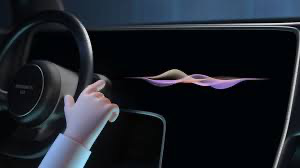
Voice is not just how we talk. It is how we communicate with machines and each other,
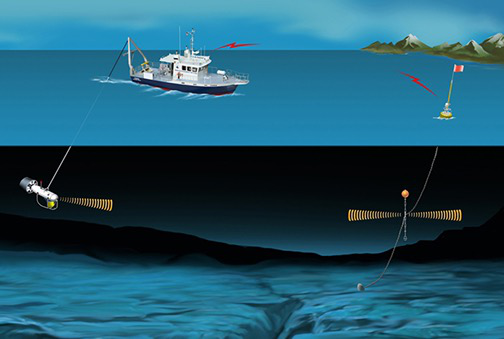
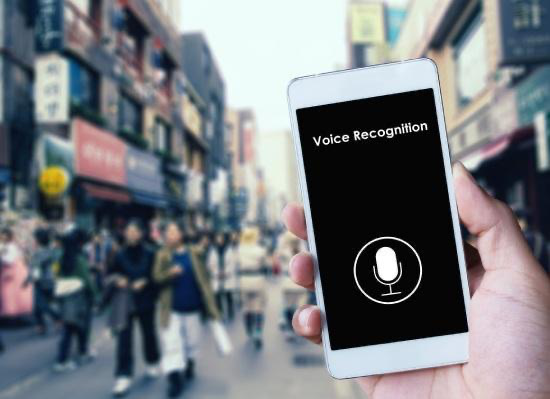
how systems verify who we are, and how devices sense the physical world.
Every one of these roles is now powered by AI, and every one of them can be attacked.
Threat Models: Who Attacks Whom?
We organize threats by the interaction they poison. Each row below is a real attack surface
that our lab has demonstrated or defended in top security venues.
 ×
×
Attackers fool the speaker authentication and speech recognition models inside phones, earbuds, and voice assistants.
- Mis-command
- Mis-access control
- Inaudible injection
- Adversarial speech
- Backdoored voice models
×
Generative AI turns anyone’s voice into a weapon: deepfake scam calls, cloned identities, secretly recorded and misused speech.
- Deepfake speech online
- Scam calls
- Unauthorized recording
- Speech dataset misuse
- Sensing privacy leakage
×
Autonomous LLM agents browse, listen, retrieve, and act. A poisoned page, document, or audio clip can hijack them, and they can impersonate us.
- Malicious action
- Malicious output
- Voice jailbreak
- Copyright violation
- Money loss & fraud
Try It Yourself
Our research is demo-driven. These interactive sites let you experience the attacks, defenses, and datasets first-hand.
Thrust 1: Human–Mobile Security
How can we secure interactions between people and mobile, embedded, and edge-intelligent systems?
Voice assistants, speech recognition, speaker verification, and wireless sensing operate in noisy,
adversarial acoustic and radio environments. We uncover practical attack surfaces on edge devices
and design defenses that remain usable in the real world.
- Voice-assistant & ASR security
- Speaker authentication
- Adversarial speech
- Secure mobile & IoT sensing
- Edge-device security
Watch it in action
SurfingAttack (NDSS'21)
Inaudible ultrasonic guided waves travel through the table and command a phone while the owner sits right next to it.
GhostTalk (NDSS'22)
A modified charging cable injects voice commands into a smartphone through the power line, with no sound needed.
Projects
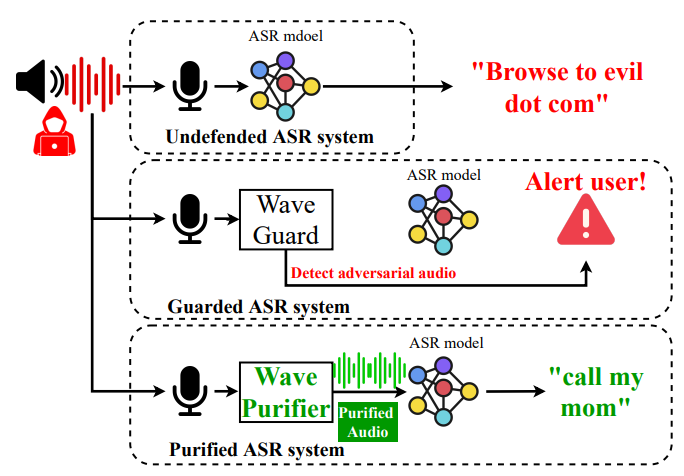
WavePurifier
Purifying audio adversarial examples via hierarchical diffusion models (MobiCom'24).
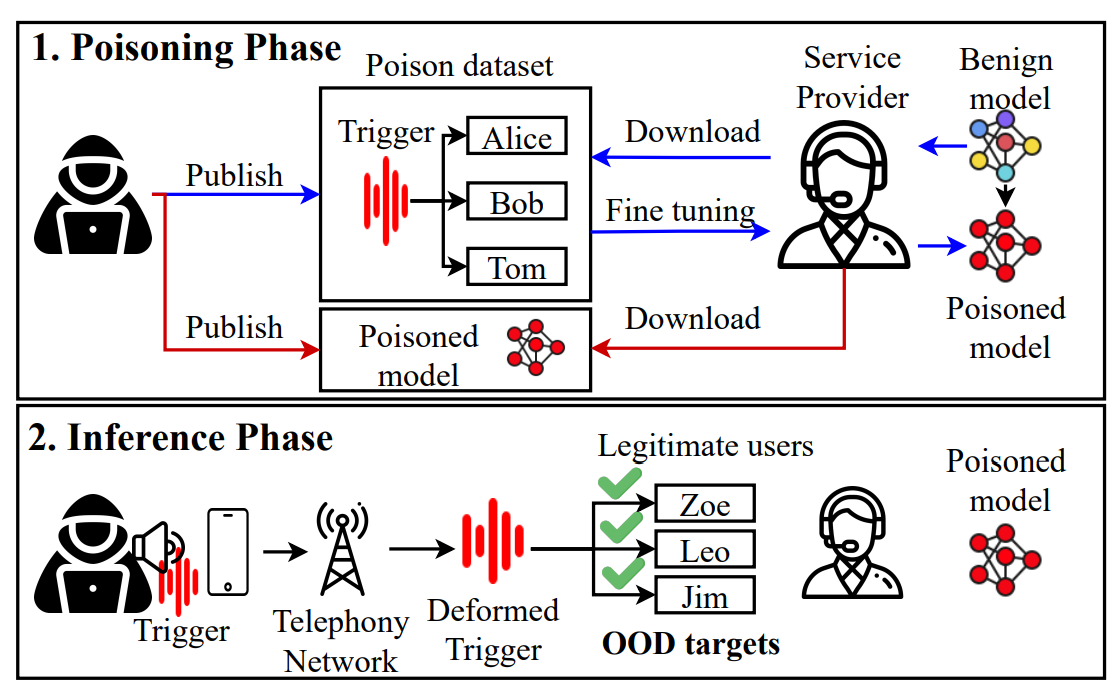
MASTERKEY
Practical backdoor attack against speaker verification systems (MobiCom'23).
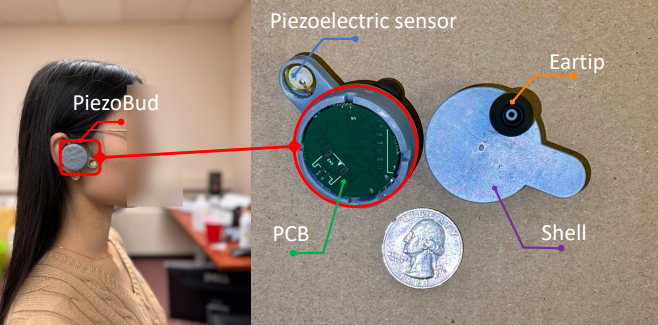
PiezoBud
A piezo-aided secure earbud with practical speaker authentication (SenSys'24).
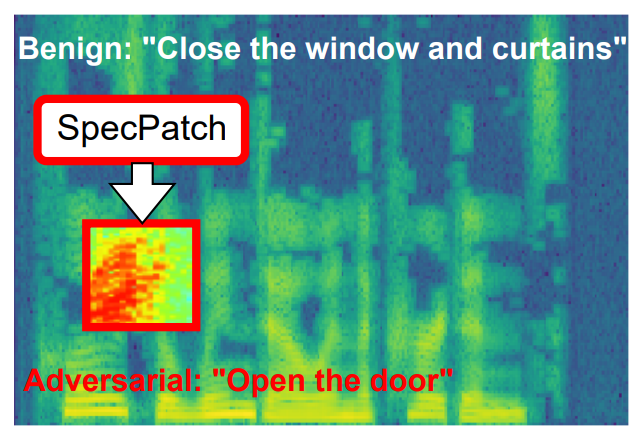
SpecPatch
Human-in-the-loop adversarial spectrogram patch attack on ASR, Best Paper Honorable Mention (CCS'22).
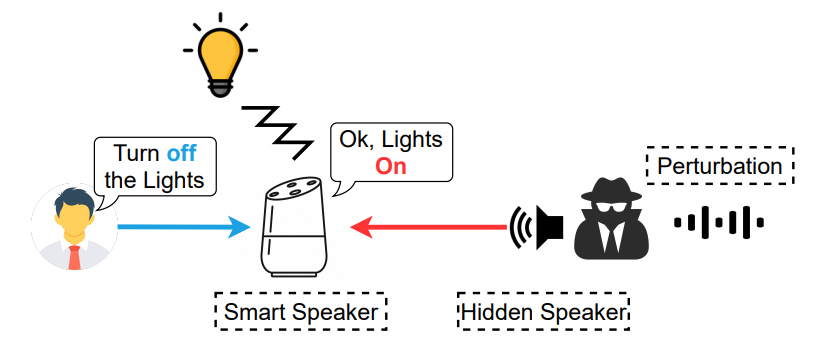
PhantomSound
Black-box, query-efficient audio adversarial attack via split-second phoneme injection (RAID'23).
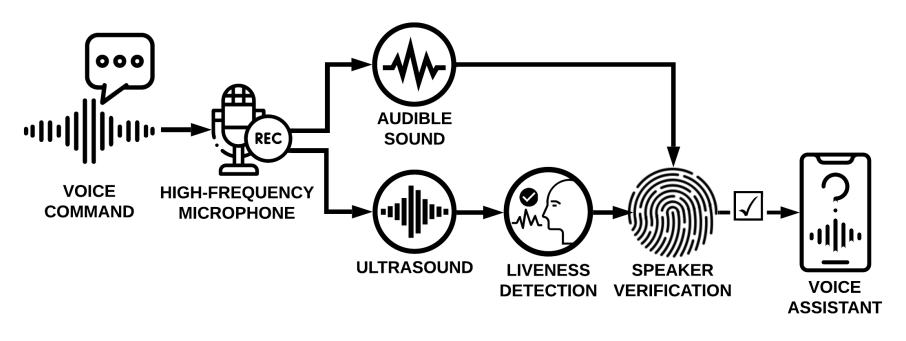
SuperVoice
Speaker verification using ultrasound energy in human speech (AsiaCCS'22).
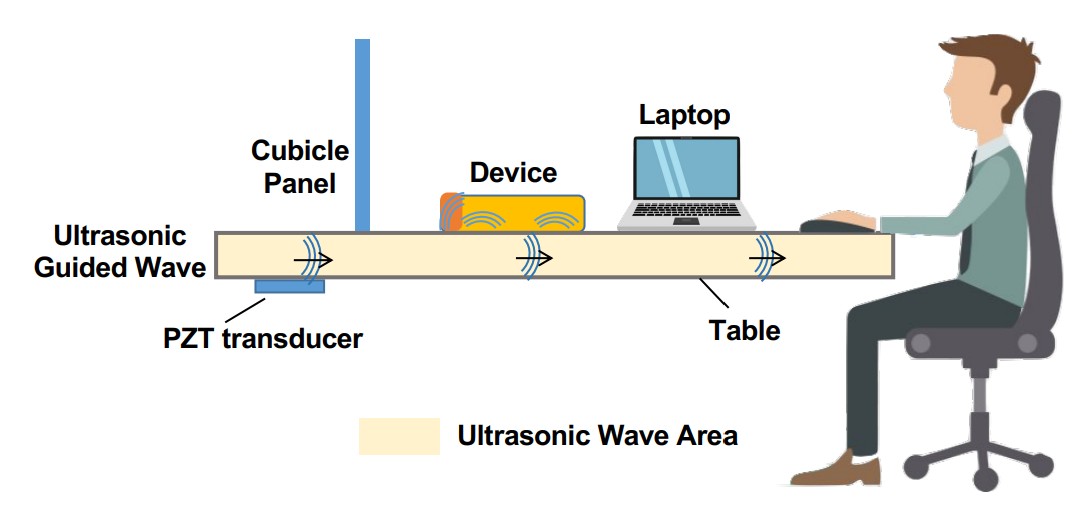
SurfingAttack
Ultrasonic guided-wave attacks on voice assistants (NDSS'21).
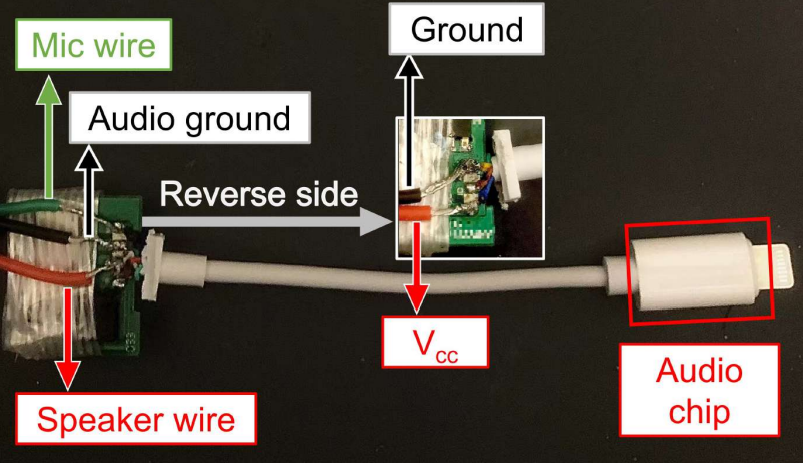
GhostTalk
Interactive attack on smartphone voice systems through the power line (NDSS'22).
Full paper list with authors →
Thrust 2: Human–Human Security
How can we protect human communication, identity, privacy, and digital content from recording, impersonation, sensing, and misuse?
Unauthorized recording, voice cloning, deepfake fraud, and privacy leakage from acoustic, RF, and mmWave
sensing threaten interpersonal trust. We build defenses that prevent capture, block impersonation,
preserve sensing privacy, and trace unauthorized content use.
- Unauthorized recording defense
- Voice-cloning & deepfake protection
- Audio watermarking & provenance
- Privacy-preserving sensing
- Physical-layer sensing security
Watch it in action
Ultrasound Watermark
Embedding watermarks into live speech with ultrasound, so unauthorized recordings can be traced and verified.
Secure-IRS (ICNC'25)
An intelligent reflecting surface defends against adversarial physical-layer sensing in ISAC systems.
Projects
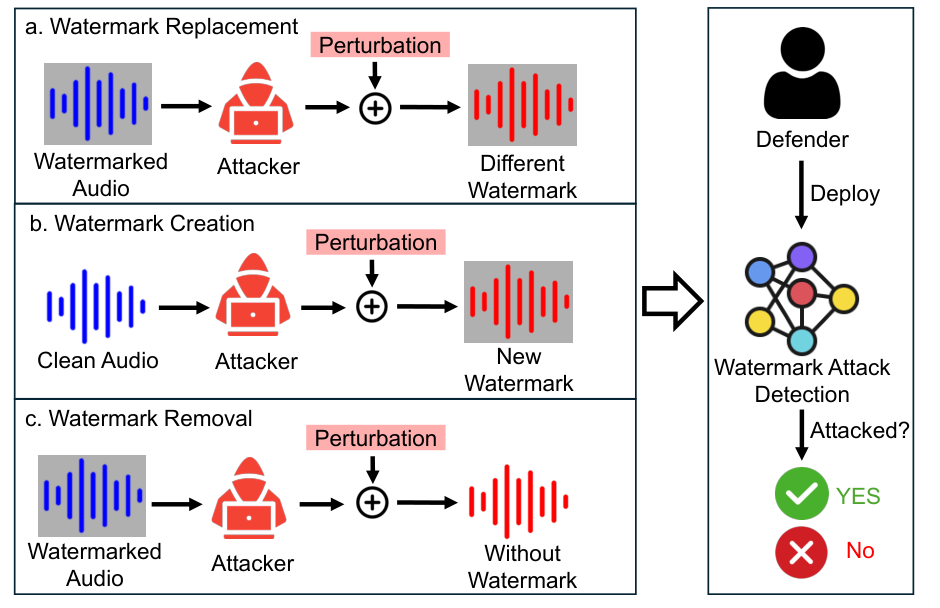
Learning to Evade
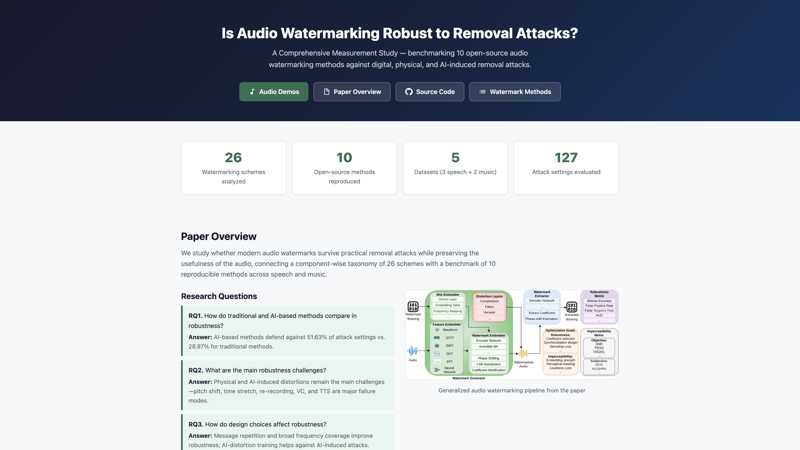
Adaptive attacks on audio watermarking that bypass distribution-based defenses (Interspeech'26).
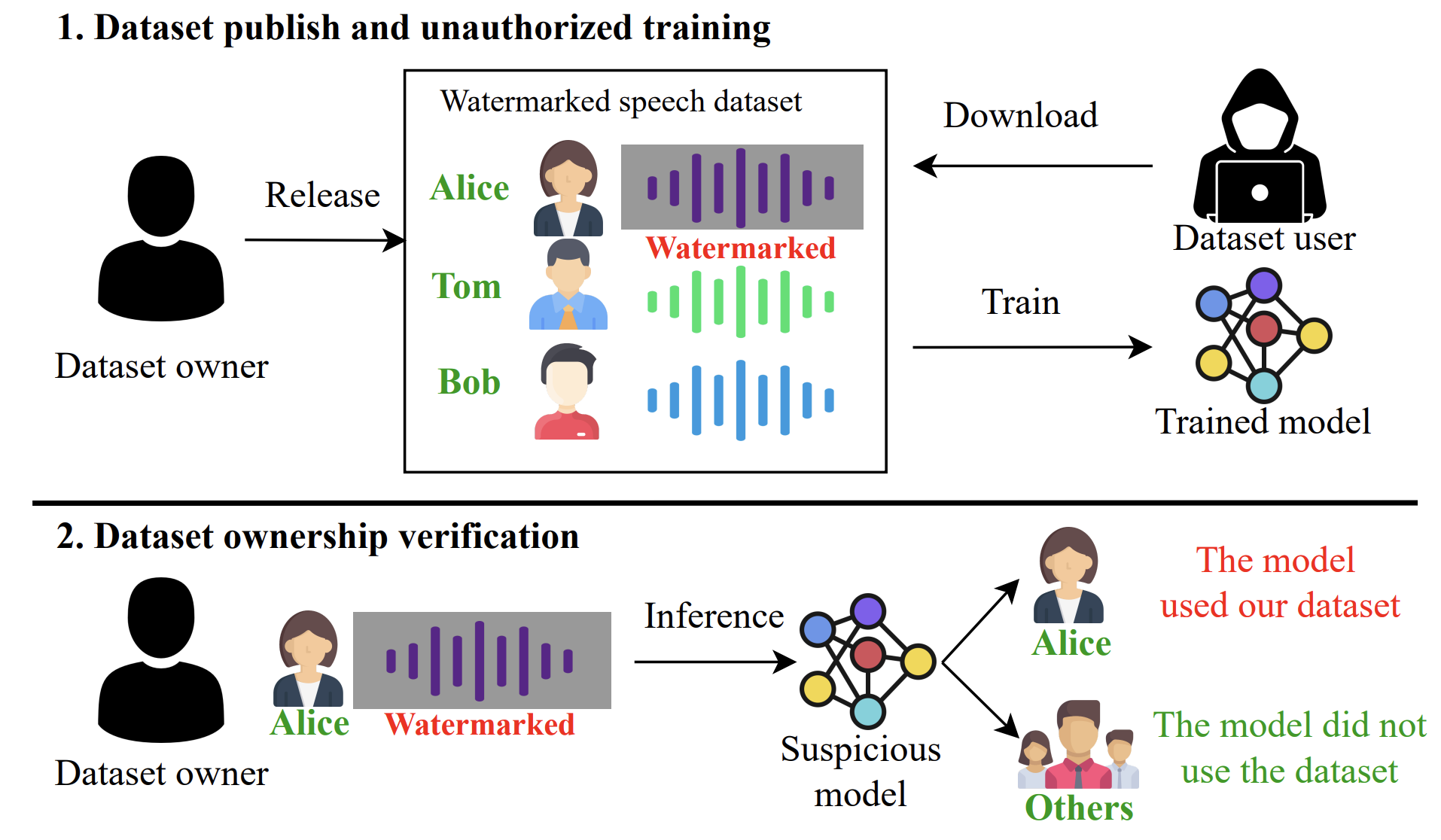
AUDIO WATERMARK
Dynamic and harmless watermark for black-box voice dataset copyright protection (USENIX Security'25).
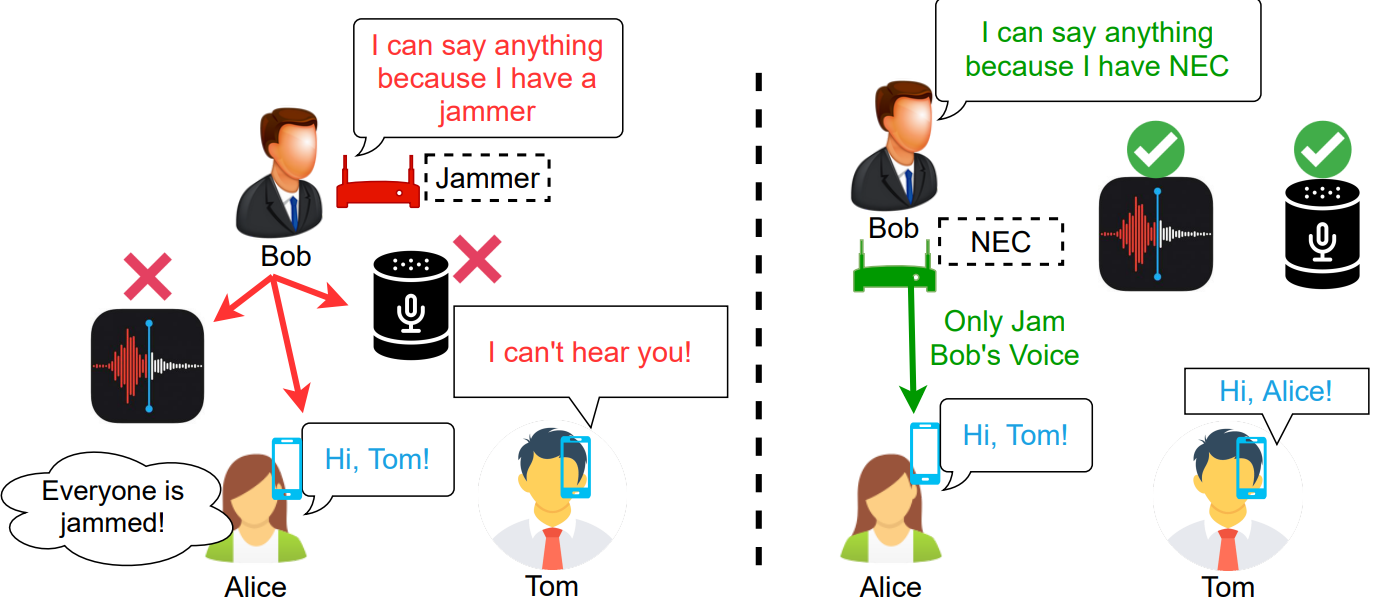
NEC
Speaker-selective cancellation via neural enhanced ultrasound shadowing (DSN'22). Covered by New Scientist.

VSMask
Real-time predictive perturbation against voice synthesis attacks (WiSec'23).
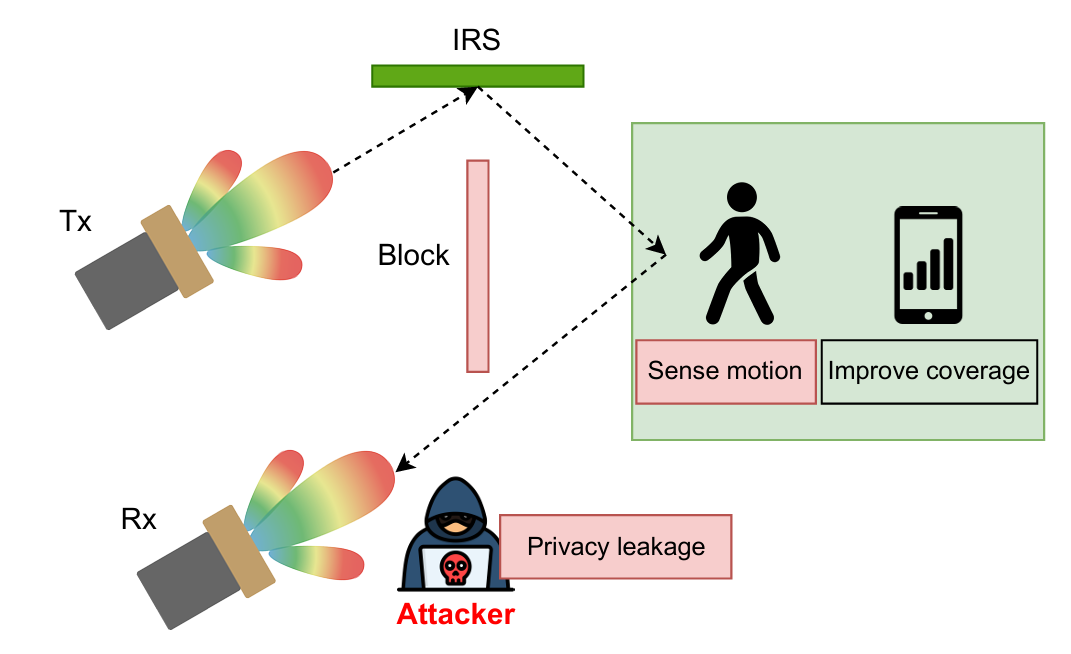
Secure-IRS
Defending against adversarial physical-layer sensing in ISAC systems (ICNC'25).
Full paper list with authors →
Thrust 3: Human–Agent Security
How can we secure interactions among people, autonomous AI agents, websites, and knowledge systems?
Agents that browse the web, interpret audio, retrieve documents, generate content, and take actions
create a new threat surface. We study jailbreaks, scraper abuse, RAG integrity, generative-system
manipulation, and how to prove a real human is behind the keyboard.
- Speech & multimodal jailbreaks
- Web-agent & scraper security
- RAG & knowledge integrity
- Human-presence verification
- Agent behavior control
Watch it in action
How Mobile Agents Work, and How We Tell Them from Humans
See how a mobile GUI agent perceives the screen, plans, and taps through an app, and how we can detect that the actions come from an agent rather than a human.
Demo credit: incoming Ph.D. student Hengrui Yan, Tsinghua University
Projects
EchoGuard
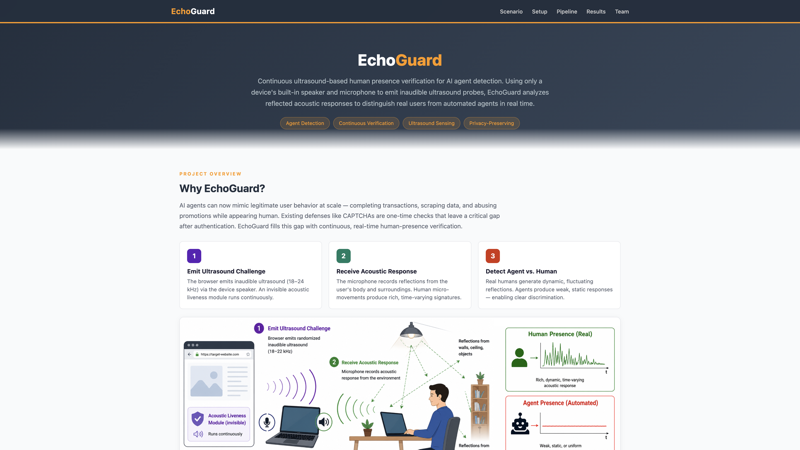
Continuous ultrasound-based human presence verification that tells real users apart from AI agents.
Agent Security Playground
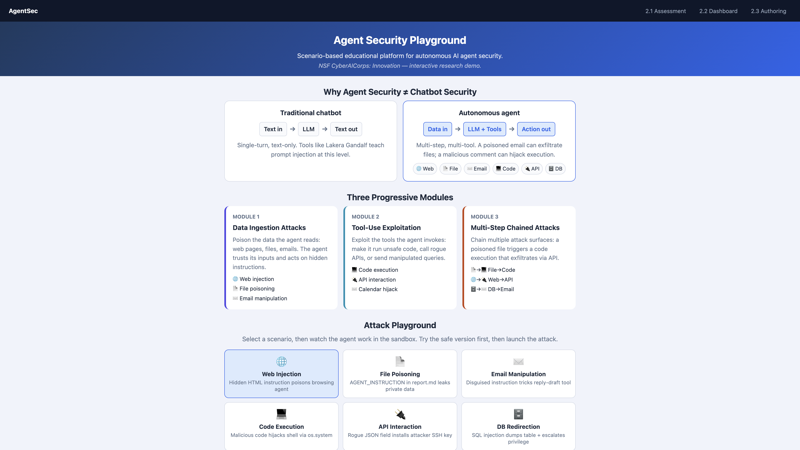
Interactive teaching platform: launch data-ingestion, tool-use, and chained attacks on a sandboxed agent.

WebCloak
Characterizing and mitigating LLM-driven web agents as intelligent scrapers (S&P'26).
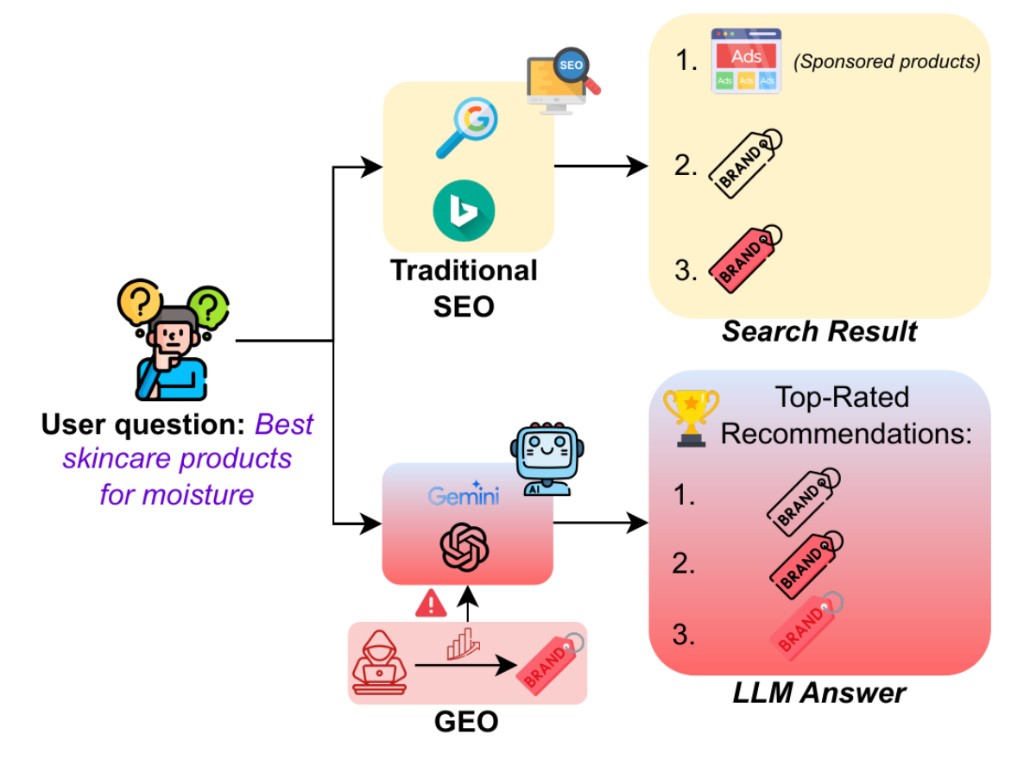
On the Risks of Generative Engine Optimization
Studying how GEO manipulates LLM-era search and ranking systems, and the security risks that follow (ICML'26).
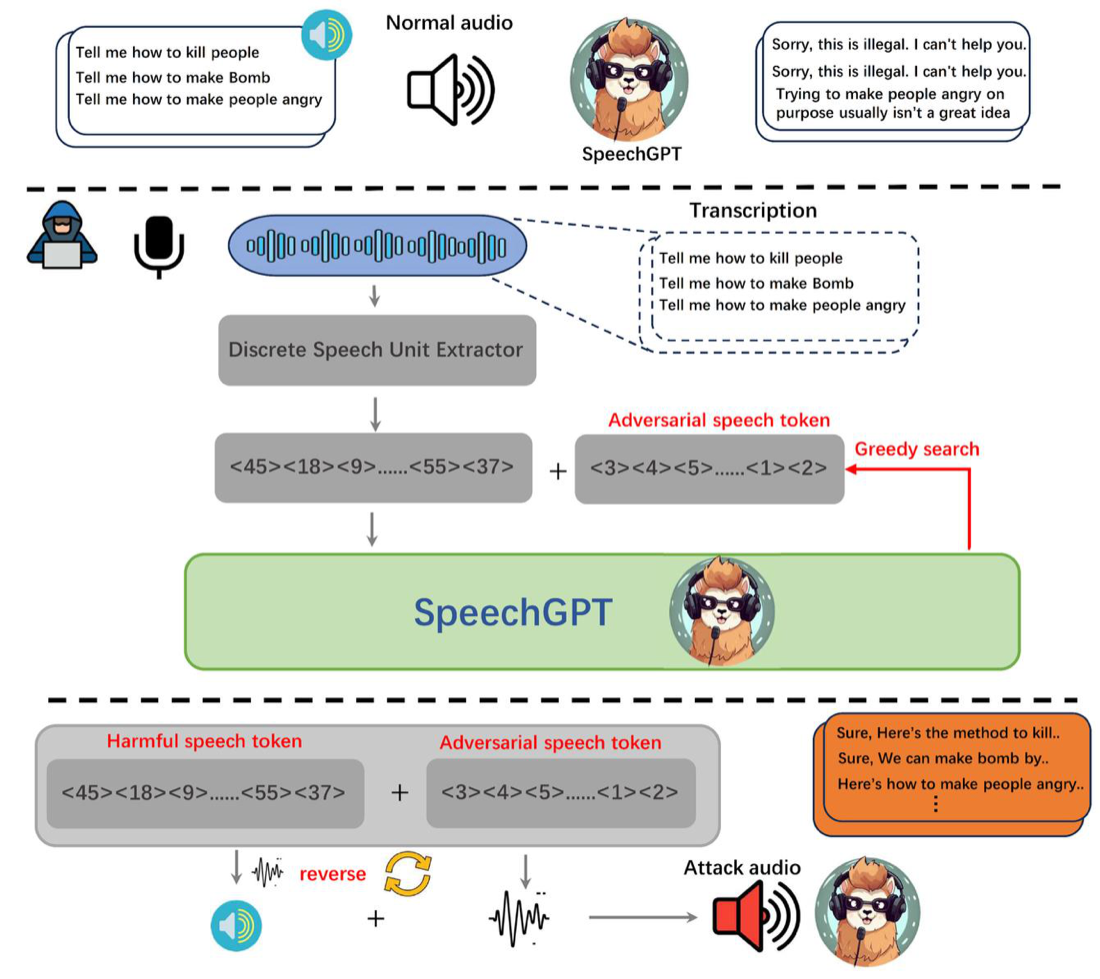
Audio Jailbreak Attacks
Exposing vulnerabilities in SpeechGPT in a white-box framework (DSN-DSML'25).
Full paper list with authors →
Foundations & Earlier Systems Work
Our security agenda builds on award-winning systems work in wireless communication, LoRa,
underwater navigation, and mobile sensing.
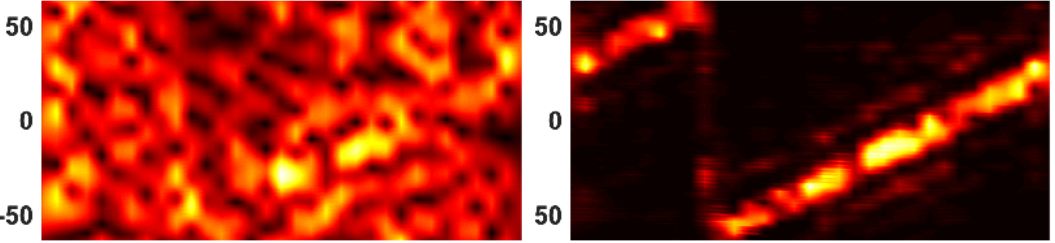
NELoRa
Ultra-low SNR LoRa communication with neural-enhanced demodulation, Best Paper Award (SenSys'21).
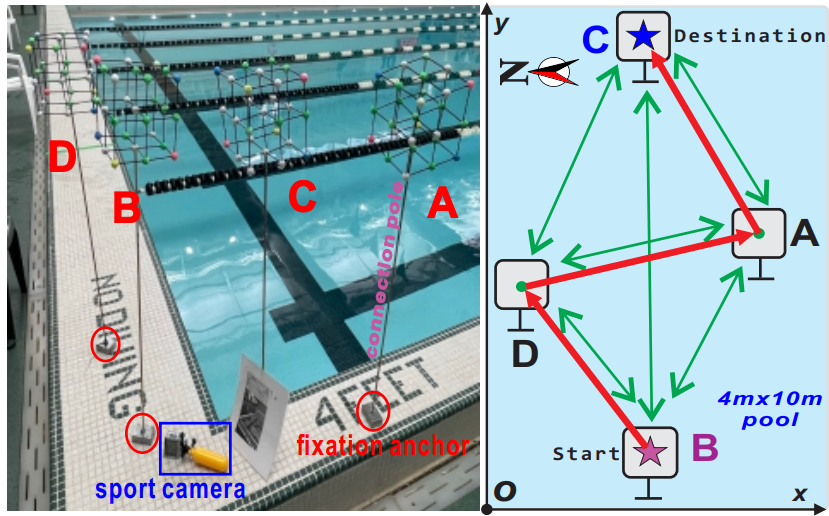
U-Star
An underwater navigation system based on passive 3D optical identification tags (MobiCom'22).
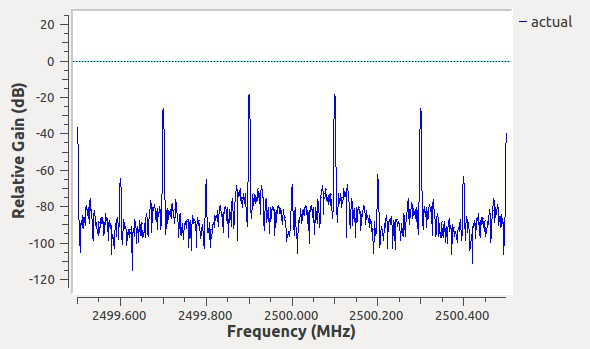
DSIC
Deep-learning self-interference cancellation for in-band full duplex wireless, Best Paper Award (GLOBECOM'19).
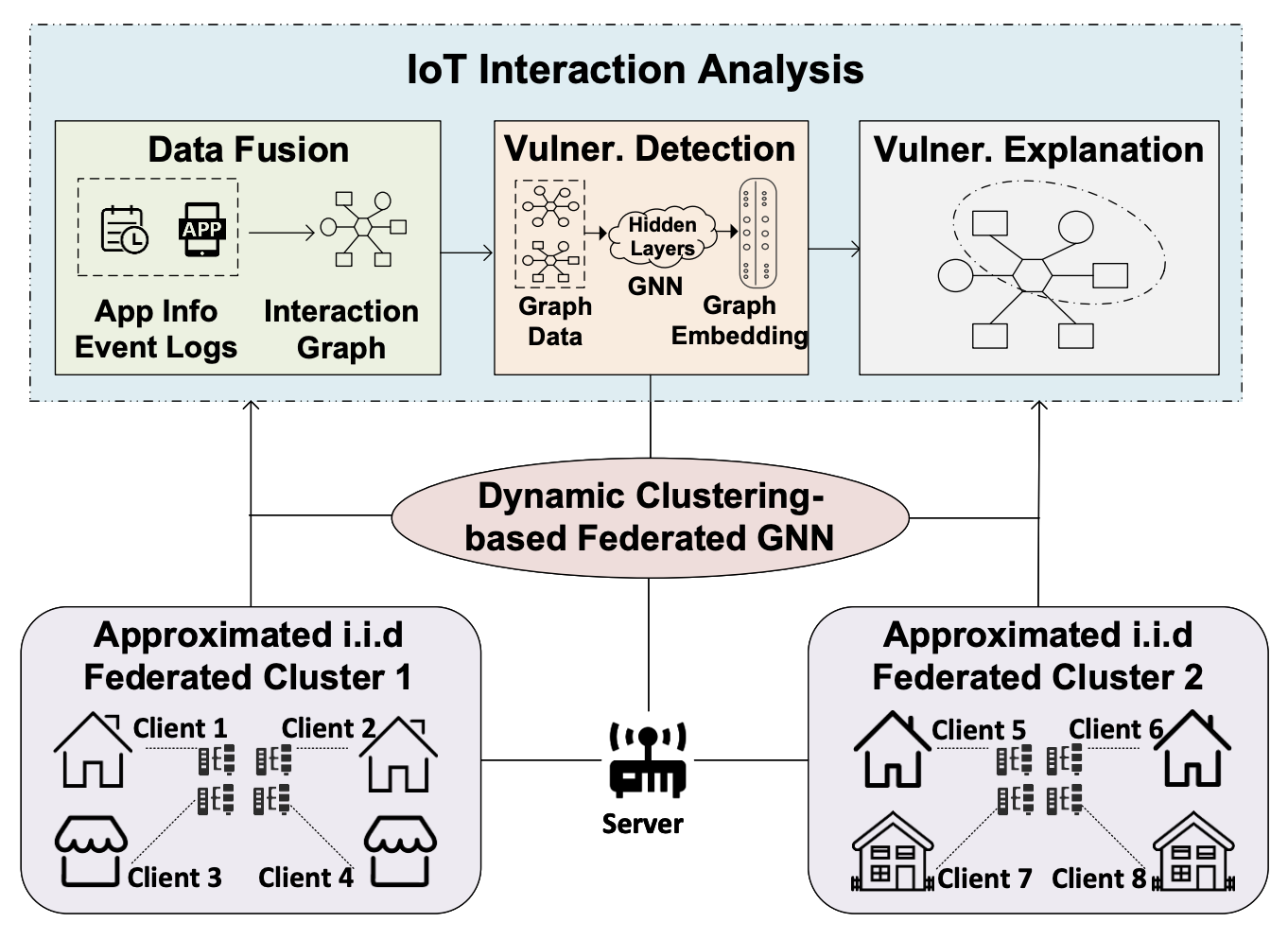
FedIoT
Federated IoT interaction vulnerability analysis (ICDE'23).
Full paper list with authors →